Recipes
Scalloped Potatoes Recipe
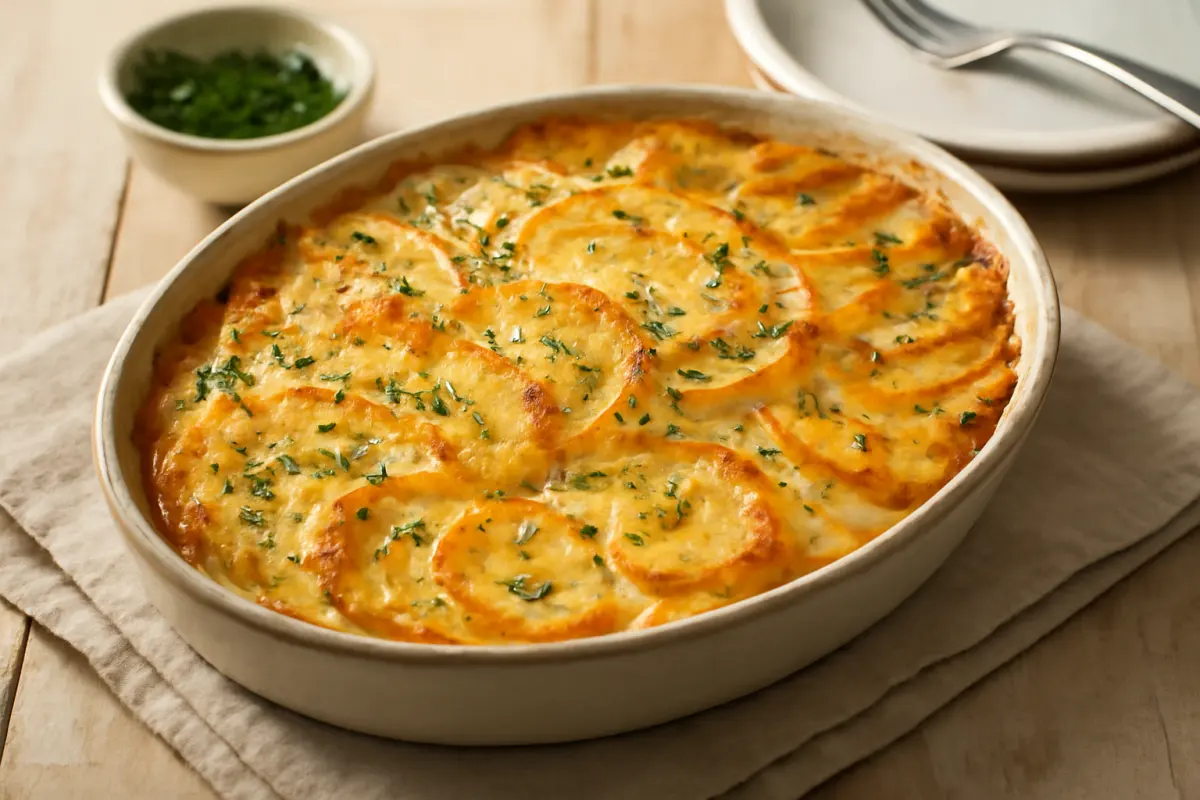
These scalloped potatoes bake into tender, creamy layers beneath a lightly golden top. Thin, evenly sliced potatoes and a gently simmered milk sauce help every layer cook through without turning watery.
Overview
This scalloped potatoes recipe makes a rich, comforting side dish from thinly sliced potatoes, a simple onion-scented cream sauce, and a little butter. The potatoes bake slowly so they become tender all the way through while the sauce thickens around them.
For the most even result, slice the potatoes no thicker than ⅛ inch and arrange them in overlapping layers. The casserole is ready when a knife slides easily into the center, not merely when the edges are browned.
Ingredients
- 2 pounds Yukon Gold potatoes, peeled or scrubbed and thinly sliced ⅛ inch thick
- 3 tablespoons unsalted butter, plus more for the baking dish
- 1 small yellow onion, finely diced
- 2 garlic cloves, finely minced
- 3 tablespoons all-purpose flour
- 2 cups whole milk, warmed
- 1 cup heavy cream, warmed
- 1½ teaspoons kosher salt, divided
- ½ teaspoon freshly ground black pepper
- ¼ teaspoon ground nutmeg, optional
- 2 tablespoons finely chopped fresh chives or parsley, for serving
How to make it
Heat the oven and prepare the dish. Set an oven rack in the center position and heat the oven to 375°F. Butter a 9-by-13-inch baking dish, or a similar 3-quart casserole dish.
Slice the potatoes evenly. Peel the potatoes if you prefer a smoother texture, then slice them into rounds about ⅛ inch thick. A mandoline makes this easier, but a sharp knife works if you keep the slices as uniform as possible. Do not rinse the slices; the surface starch helps thicken the sauce.
Cook the onion sauce. Melt the 3 tablespoons of butter in a medium saucepan over medium heat. Add the onion and cook for 4 to 5 minutes, stirring occasionally, until softened but not browned. Add the garlic and cook for 30 seconds.
Make the roux. Sprinkle the flour over the onion mixture and whisk constantly for 1 minute. The flour should look moistened and lightly foamy, with no dry patches.
Add the dairy. Gradually whisk in the warm milk and cream. Add 1 teaspoon of the salt, the pepper, and the nutmeg if using. Bring the sauce to a gentle simmer, whisking often. Cook for 3 to 4 minutes, until it lightly coats a spoon. It does not need to be as thick as gravy; it will continue to thicken in the oven.
Layer the potatoes. Arrange one-third of the potato slices in the prepared dish, overlapping them slightly. Spoon or pour over one-third of the sauce. Repeat twice more, finishing with the remaining sauce and spreading it toward the edges so the top potatoes are moistened.
Cover and bake. Cover the dish tightly with aluminum foil and bake for 45 minutes. The foil traps steam, allowing the potato centers to soften before the top browns.
Uncover and finish baking. Remove the foil and bake for another 25 to 35 minutes. The top should be lightly golden and bubbling at the edges. Test the center with a thin knife or skewer; it should pass through the layers with very little resistance. If the top browns before the potatoes are tender, loosely cover the dish again and continue baking in 10-minute intervals.
Rest before serving. Let the casserole rest for 15 minutes. This gives the sauce time to settle so the slices hold together more neatly. Sprinkle with chives or parsley and serve warm.
Expert tips
- Choose the right potato: Yukon Golds give the creamiest texture while holding their shape. Russet potatoes also work, but they soften more readily and can make the sauce thicker.
- Keep the slices thin and even: Thick or uneven slices are the most common reason the center stays firm while the top looks finished.
- Warm the milk and cream: Warm dairy blends into the roux more smoothly and helps the sauce return to a simmer quickly.
- Avoid boiling the sauce hard: A gentle simmer is enough. Vigorous boiling can make a dairy sauce look grainy.
- Do not skip the resting time: Cutting into the casserole immediately can make the sauce run out before it thickens around the potato layers.
- If the potatoes are still firm: Cover the dish and return it to the oven at 375°F for 10 to 15 minutes. Test the center again rather than judging by the color of the top.
- If the casserole seems watery: Bake it uncovered for 10 to 15 additional minutes, then rest it. Excess moisture can also come from rinsed potatoes or very watery dairy substitutions.
Serving and storage
Serve the potatoes warm as a side with roast chicken, beef, pork, or a green vegetable. They are rich enough that a crisp salad or simply seasoned vegetables make a useful contrast.
Cool leftovers promptly and refrigerate them in a covered container for up to 3 days. Reheat individual portions in the microwave, or cover the casserole with foil and warm it in a 325°F oven until hot throughout. For the best texture, avoid freezing; the dairy sauce may separate and become grainy after thawing.
Frequently asked questions
Can I make scalloped potatoes ahead of time?
Yes. Assemble the casserole, cover it tightly, and refrigerate it for up to 24 hours before baking. Let it sit at room temperature while the oven heats, then bake until the center is completely tender; a chilled casserole may need an extra 10 to 20 minutes.
Why are my scalloped potatoes still hard in the middle?
The slices may be too thick, the dish may be too deep, or the casserole may need more covered baking time. Cover it again and bake at 375°F in 10- to 15-minute increments until a knife slides easily into the center.
Can I use half-and-half instead of heavy cream?
Yes. Replace the 1 cup of heavy cream with 1 cup of half-and-half. The sauce will be slightly lighter and may be a little less rich, but the recipe will still work.
What is the difference between scalloped potatoes and au gratin potatoes?
Scalloped potatoes are traditionally made with potatoes and a creamy sauce, while au gratin potatoes usually include cheese and a browned cheese topping. This recipe is cheese-free, though you can add a small amount if you prefer.
How thin should I slice potatoes for scalloped potatoes?
Aim for slices about ⅛ inch thick. Thinner slices can become soft or break apart, while thicker slices may remain firm in the center before the top is fully browned.